
Prudence
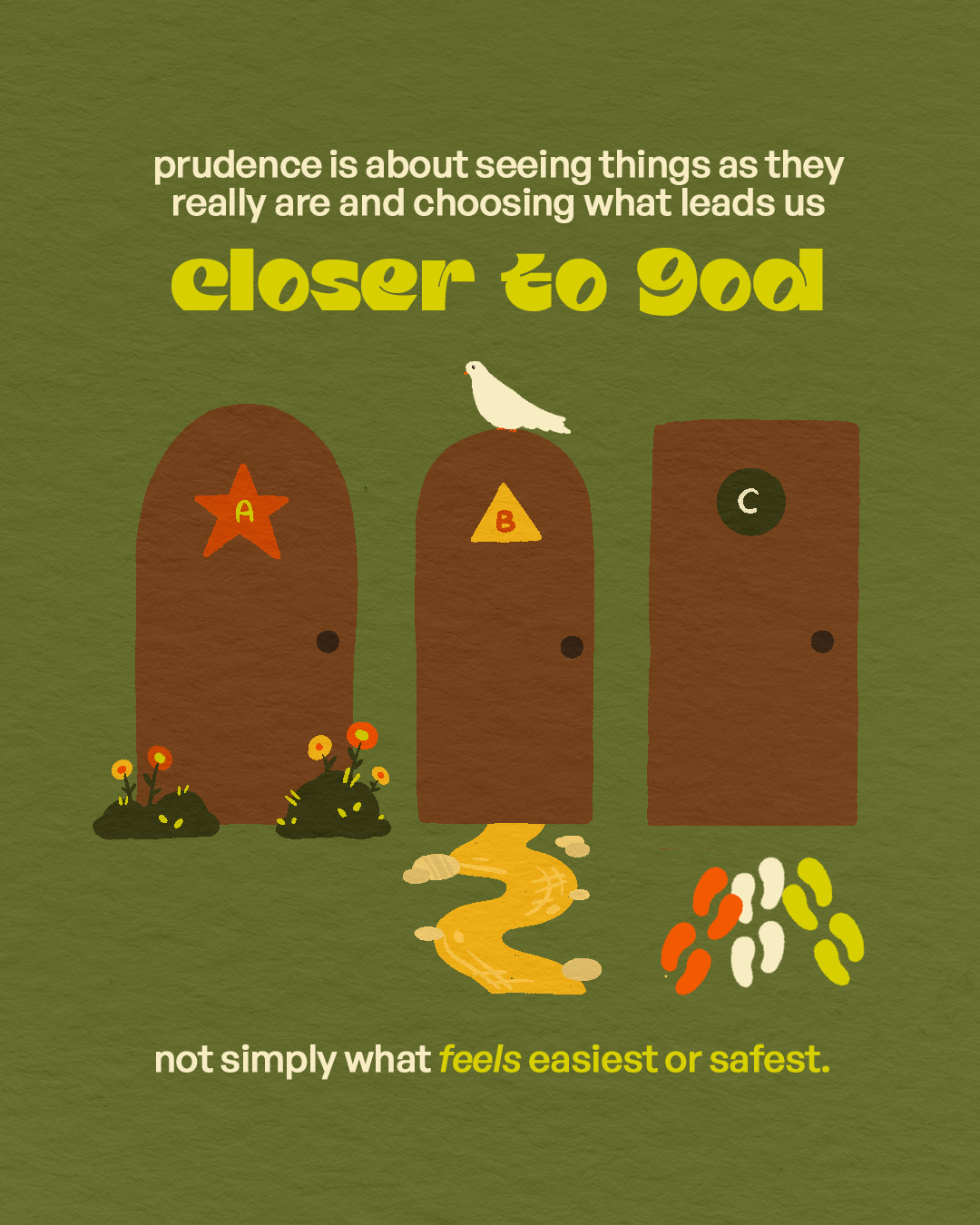
Before learning about prudence, I always thought it meant being careful and avoiding mistakes. If I spent a long time thinking through a decision, I assumed I was being prudent. However, I have since realised that prudence is much more than simply being cautious. The Catechism of the Catholic Church describes prudence as the virtue that helps us recognise our true good in every situation and choose the right way to achieve it. In other words, prudence is about seeing things as they really are and choosing what leads us closer to God, not simply what feels easiest or safest.
This challenged the way I think about decision-making. We often find ourselves overthinking because we are afraid of making the "wrong" choice. We tell ourselves that we are trying to be wise, but sometimes it is really fear disguised as prudence. We keep weighing every possibility, imagining every outcome, until we become stuck. Through learning about this virtue, I have realised that living with constant anxiety is not true prudence. Prudence is not about having complete certainty before acting. Rather, it is about sincerely seeking what is good, trusting God, and then having the courage to move forward.
At the same time, prudence is also not the same as acting on impulse.
Perhaps, there have been moments where we made decisions simply because they felt right in the moment, only to regret them later. Our emotions are gifts from God, but they are not always good guides. Prudence reminds us to pause and ask, "What is the loving and truthful thing to do?" instead of simply following our first reactions.
One aspect of prudence that I found especially helpful is that it can be practised through three simple steps that St. Thomas Aquinas describes in Summa Theologica: seeking counsel, making a good judgement, and acting decisively. Seeking counsel reminds us that we do not always have all the answers, and that asking trusted people for advice is a sign of humility, not weakness. Good judgement means weighing what we have learnt against God's truth. Finally, prudence calls us to act. No matter how much we pray or reflect, if we never make a decision because we are afraid, or never take the first step and stick with your decision to the end, we are still not living prudently.
Ultimately, prudence is not just for life's biggest decisions. It is something we can practise every day in how we spend our time, how we respond to others, and how we choose between what is easy and what is truly good. A simple way to begin is to pause before making a decision, even a small one, and ask yourself, "What is the true good here?" It could be choosing to put your phone away to spend time with your family, taking a moment to pray before replying to someone when emotions are running high, or asking a trusted friend or mentor for advice instead of relying only on your own judgement. These ordinary moments may seem insignificant, but they slowly form a disposition of prudence in our hearts. As we grow in prudence through these small choices, we become better prepared to face life's bigger decisions with wisdom, trust, and confidence in God. So the next time you are faced with a choice, don't rush or let fear take over. Slow down, seek what is truly good, and take the first faithful step forward.
Reflection questions:
Can you think of a recent decision where you acted out of fear or impulse rather than true prudence? What could you have done differently?
What is one small area of your daily life where God might be inviting you to practise prudence this week?
The next time you have to make a decision, how can you slow down, seek what is truly good, and trust God before acting?